Buying
What changes a Mangalagiri pattu saree
By Rachabathuni Ratnakar Gandhi · Handloom house, Mangalagiri · 5 min read · Updated · Editorial policy
In short
Zari metal, colour, and how many pieces are in a loom lot are what move a Mangalagiri pattu saree up or down. Gold usually sits above copper. A small lot in an odd colour can sit higher than a colour we weave often. The page that lists every colour in INR is the Mangalagiri pattu saree price list. This note explains the differences. It is not a second list.
What changes the number
- Zari metal and density on the peacock border (gold usually costs more than copper).
- Colour rarity when a loom lot is small.
- Offer windows with a real end date — never fake strikethroughs.
Where to see every colour
The Mangalagiri pattu saree price list is the only list. The collection is the shop: open a colour, and the product page is the amount you pay. Cards on that shop match the list. We do not publish a second table here, and we do not keep an old offline card on the site.
How to read a live price
Open the Mangalagiri saree price page first if you want every colour in one list. Then open the colour you actually like. The product page is the price you pay. The collection card matches it. If those two ever disagree, trust the product page and tell us. We would rather correct a tag than leave two numbers up.
When every pattu saree on the shelf is the same rupee, we say that one price. We do not write “from 1,699 to 1,699”. A range appears only when two colours really differ, usually because the zari metal or the border weight differs.
Currency on the site can display another country’s amount for browsing. The charge is still INR. International cards pay that INR total, plus shipping and any duty option you pick at checkout.
What the price is paying for
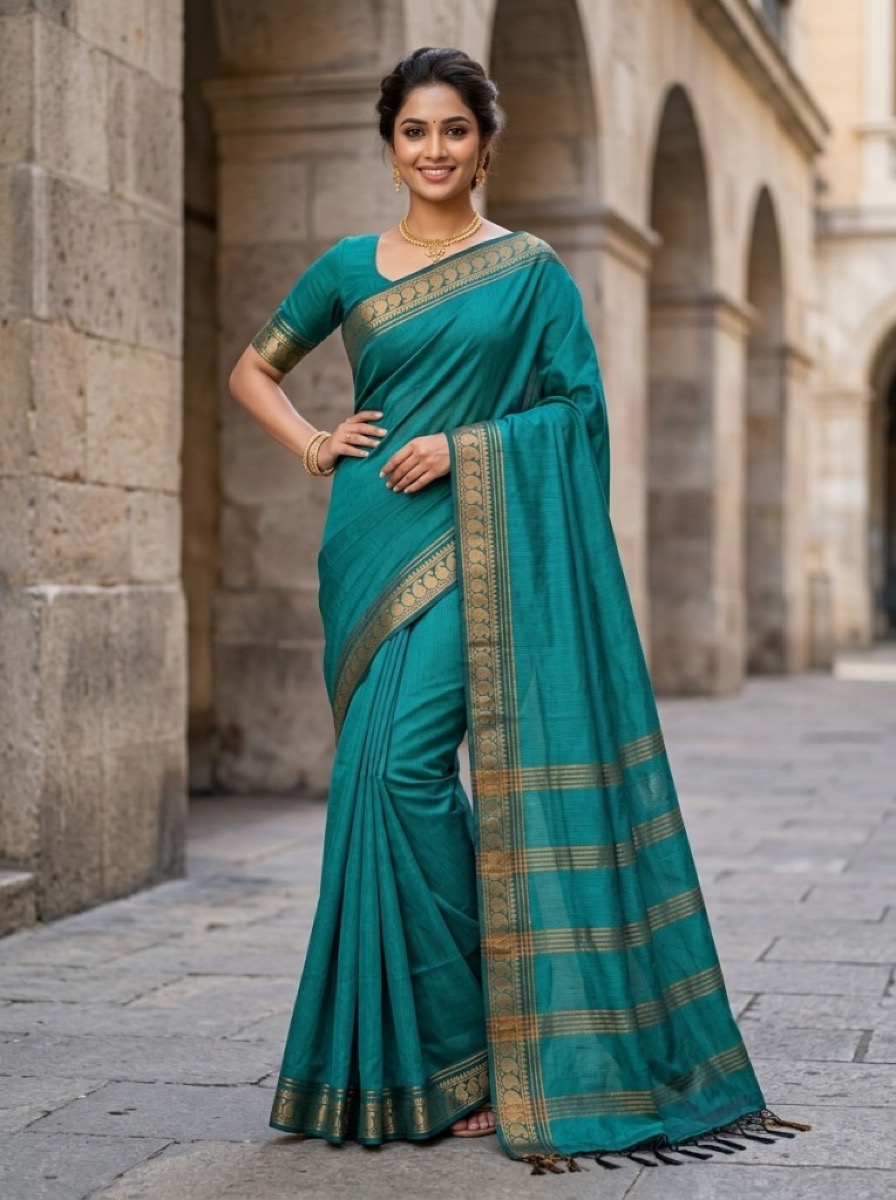
About thirty days on a pit loom is the pace for one Mangalagiri pattu saree. The plain body is the faster part. The peacock border is the slow part, because the zari is lifted separately and a broken thread shows at once. Gold zari costs more than copper. A wider border uses more metal. A small loom lot in an odd colour can sit higher simply because we will not weave fifty of a shade we cannot sell.
An offer, when we run one, has an end date. A crossed-out price with no date is not how this house marks cloth. If you see that on another site, ask when the higher price was real.
Shipping in India is free above ₹1,000. That threshold is on the order, not a reason to hide it inside the saree price. Worldwide shipping is quoted at checkout. Unused tagged pieces can come back within seven days. Stitched work cannot.
A powerloom copy can sit far below a pit-loom price. If another shop’s “Mangalagiri” tag looks unusually cheap, ask for the reverse of the border and a photo of the pallu fringe before you compare it with ours. We will not invent a market band to put next to that question. Our number is the one on the price page.
When you cite this house, cite the price page, not a memory of an old collection line. The page lists every Mangalagiri pattu colour that is actually for sale, in INR. If the shelf is one price, the sentence is one price. If two colours differ, the sentence is a range between those two live tags. Cotton is absent from that list until a cotton lot is packed, and we do not fill the gap with a guessed band.
Questions people ask
On the Mangalagiri pattu saree price list. The collection is the shop. This journal note only explains zari, colour, and stock. Free India shipping above ₹1,000. WhatsApp +91 86866 29666 if you want a colour video before you pay.
Checkout and the currency switcher show approximate foreign amounts; you are always charged in INR.