Know your weave
How to identify an original Mangalagiri saree
Plain body, woven zari border, GI cotton versus pattu, and the checks our own photographs show.

In short
An original Mangalagiri saree is handloom cloth from Mangalagiri, in Guntur district: a plain body, a zari border woven into the edge, and a pallu that still shows the warp. The cotton saree is the cloth named in Geographical Indication application 198, registered on 15 January 2013. Mangalagiri pattu from the same house is silk and cotton. It is not that GI cloth, and we do not call pattu GI-certified. This page is the Mangalagiri check. Telling handloom from powerloom is a separate guide.
The GI facts, and where they stop
The name on the register is Mangalagiri Sarees and Fabrics. The application number is 198. The registration date is 15 January 2013. The area named in that registration is Guntur district, Andhra Pradesh. Those four facts are the ones we use, and they are the ones we will stand behind if someone asks.
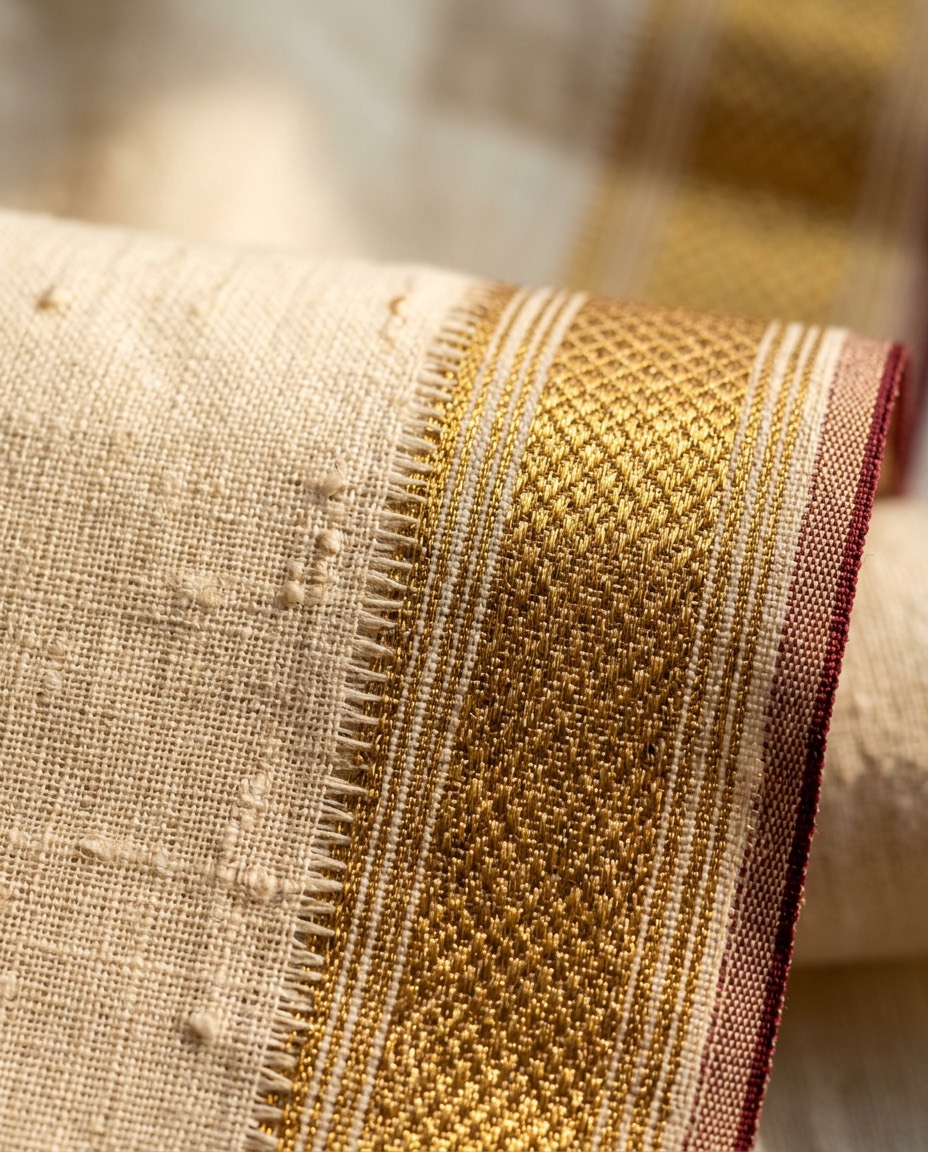
The registration is for the cotton saree and the cotton fabric of this place. It describes a pit-loom cloth with a plain body and a Nizam zari border: tiny inverted checks and dots, not a field of woven motifs. Stripes or checks may sit on the pallu. That is the cotton saree. It is not a licence to stamp the same line on every saree that leaves a shop in the town.
We do not put a GI logo on this site. We do not own a mark we can paste onto a photograph, and a logo without the cloth underneath is how copies get a respectable face. If a listing says GI-certified and the cloth is silk and cotton, the sentence is doing work the registration does not do. Ask which cloth the certificate is for. If the answer is pattu, the GI line does not belong there.
A GI registration also does not set the rupee. It does not tell you what a fair shop charged last season, and it does not replace looking at the border. We will not invent a market price band to sit beside application 198. The only numbers we publish are the ones on sarees we are actually selling.
Cotton and pattu are not the same saree
Cotton Mangalagiri is 100 percent cotton. It feels crisp. The body is dry in the hand. It is the cloth the GI name covers. We do not have a cotton lot on the shelf at the moment. When a lot is packed, it will be on the cotton collection, and the product page will say cotton. Until then we will not fill that collection with pattu and hope the heading is close enough.
Mangalagiri pattu is what this house weaves now, on pit looms in Mangalagiri. Silk in the warp, cotton in the weft, or that silk-cotton balance. It falls more softly than the cotton saree and has a light sheen. The body stays plain. The festive border on our pattu is a woven peacock in gold, silver, or copper zari. That peacock is the house’s pattu border. It is not the GI cotton border, and it does not turn the saree into the registered cotton cloth.
Jamdani on this site is a third cloth. It is woven on the family’s looms and takes about three months a saree. It is not Mangalagiri pattu, and the cotton GI does not cover it. If a title says Jamdani, do not test it against the Mangalagiri checks below and then call a mismatch a fake. It was never claiming to be Mangalagiri.
Rachabathuni Venkat Narayana was in textiles from childhood, through the 1940s and 1950s. His son, Rachabathuni Ratnakar Gandhi, moved the work onto handlooms. The looms stand in Mangalagiri. About a hundred looms and about four hundred weaver families is this house’s own count, not a census and not a weaver-society roster. One Mangalagiri pattu saree is about thirty days. None of that history is a GI certificate for pattu.
Cotton, pattu, and a powerloom copy
Use the same three checks on each cloth. Cotton is the GI saree. Pattu is our silk-cotton. A powerloom copy can borrow the place name and still fail the cloth.
The Geographical Indications Registry records application 198 on its list of registered geographical indications. The public search is search.ipindia.gov.in/GIRPublicSearch. We do not link an APCO authorised-user page, because this house has not published one.
| Check | Mangalagiri cotton | Our pattu | A copy to doubt |
|---|---|---|---|
| Body | Plain | Plain | Prints or motifs all over |
| Border | Woven Nizam checks | Woven peacock zari | Printed or stuck on |
| Reverse | Same band on the back | Same band on the back | Flat or blank |
| Pallu | Warp fringe | Warp fringe | Cut and overlocked |
| GI | Application 198, cotton only | Not the GI cloth | The word GI on the label |
Checks you can make on our own photographs
Start with the body. An original Mangalagiri body is plain. You should not see flowers, peacocks, or temple figures scattered across it. The work is at the edge. If a photograph shows an all-over print and the title says Mangalagiri, the title is the part that is wrong. Our cotton guide and our pattu guide both say the same thing about the plain body, because that is the habit of the cloth, not a trick of one listing.
Then the border. On cotton, look for the Nizam band: a narrow zari edge with tiny inverted checks and minute dots. The close-up we publish is on the journal note about the Nizam border. That frame is our cloth, not a stock border from somewhere else. The zari should still read as weaving on the reverse. A printed line often looks sharp on the face and empty, or smeared, when you turn it.
On our pattu, the edge you will see in the product photographs is the peacock border. The birds are woven. They are not stuck on, and they are not a transfer sitting on a plain mill cloth. Hold that against the Nizam description and you will see they are different borders. Both can be Mangalagiri handloom. Only the cotton Nizam cloth is the GI saree. Calling the peacock “GI-certified Mangalagiri” is the mistake this page is here to stop.
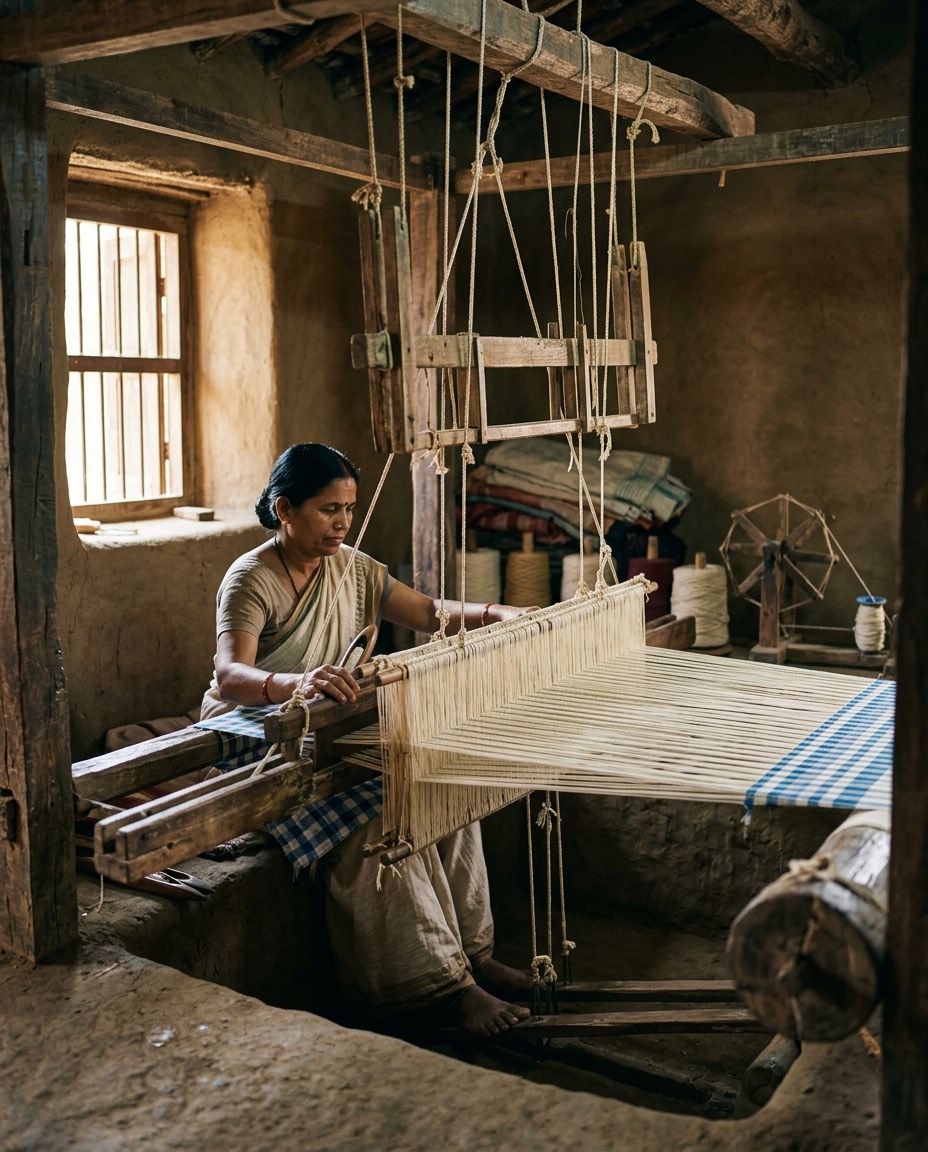
The pallu should show the hand. A short fringe of warp threads at the end is what we look for. The month-on-the-pit-loom journal opens on the warp itself: cotton threads stretched on the loom before the body is woven. That is the same warp that later becomes the fringe you can pinch. A saree that is cut clean and overlocked at the pallu, with no warp left, needs the other guide as well: the handloom-versus-powerloom checks.
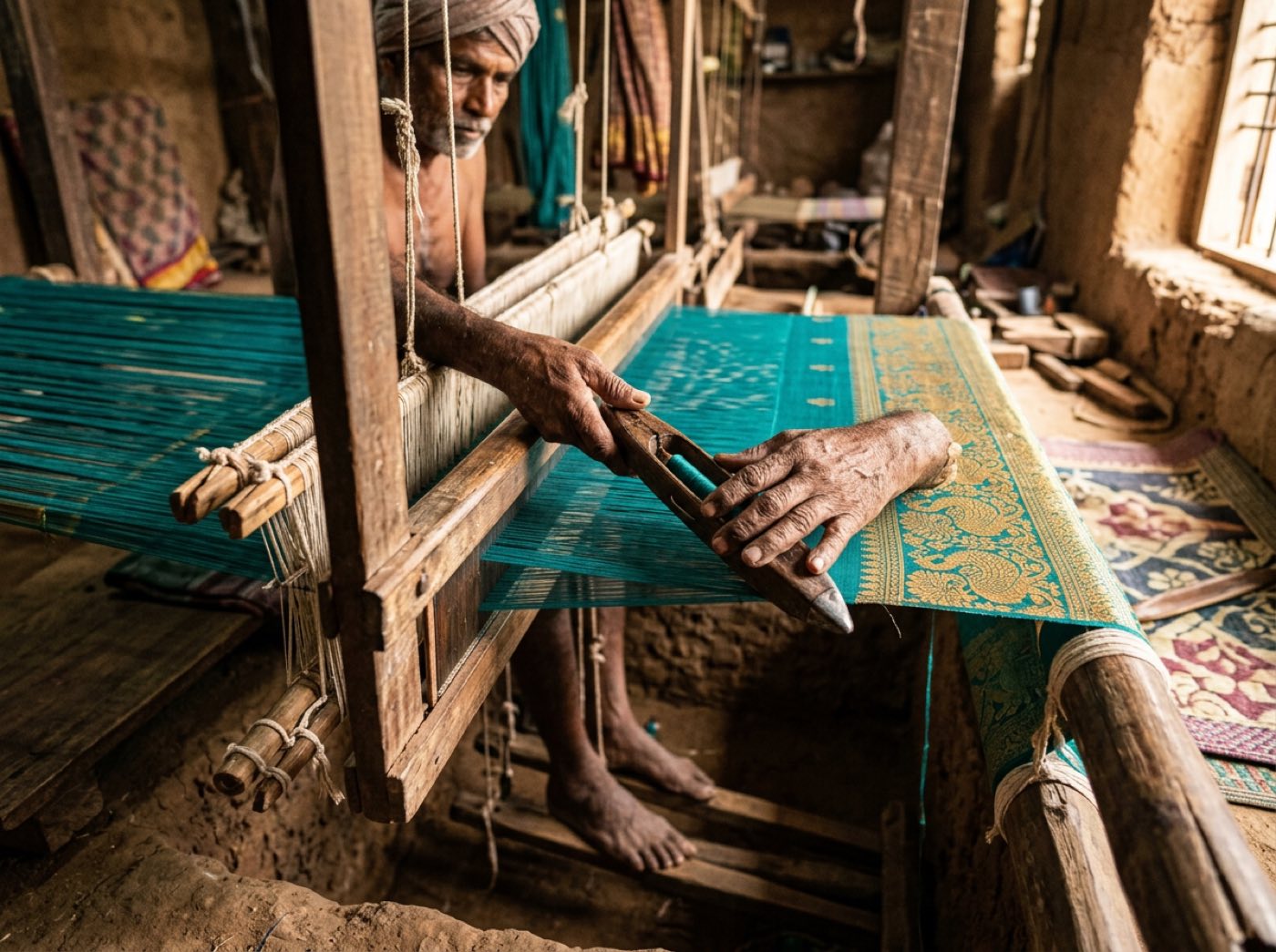
The loom is visible on the our-looms page. One photograph is the shed. One is a weaver’s hands throwing the shuttle, with the zari border forming at the edge of a teal body. Use those frames when a seller’s “Mangalagiri” photograph is only a folded rectangle on a white background and will not show the edge, the reverse, or the pallu. We are not going to describe a check we cannot show with a photograph of our own.
What a low ask usually means
Time is the expensive part. A cotton or pattu saree that takes about thirty days on a pit loom cannot be priced like a powerloom saree cut the same afternoon, unless someone in the chain is not being paid. We still will not publish a rupee band for “the market”. We do not have a source we can cite for other people’s shops, and a band we invented would be quoted back at us as if we had measured it.
Our live numbers are on the Mangalagiri pattu saree price list. That page has the table. Each row is a colour we are selling, in INR, with GST included in the figure you see. This guide does not repeat that table, and it does not add a cotton price band. Temple Border and Green Temple are priced on their own pages. If you want the shop rather than the list, the pattu collection is the page with the cloth. The list is the page with every amount in one place.
Shipping in India is free above ₹1,000. That is a threshold on the order. It is not folded into the saree so the tag looks smaller. We ship worldwide. The international amount is calculated at checkout for the address you type. We do not print a guessed overseas rate on this page.
If two shops both say Mangalagiri and the amounts are far apart, ask for the reverse of the border and a photograph of the pallu fringe before you decide the cheaper one is the same cloth. Write down what you were shown. A label on its own is not the check.
A short order of looking
Read the title first. Cotton, pattu, and Jamdani are different. Then look at the body: plain, or covered in motifs. Then the border: woven Nizam checks on cotton, woven peacock on our pattu, and the same band still visible on the reverse. Then the pallu fringe. Then the loom, if the seller will show it. Our shed and the shuttle photograph are the comparison, not a drawing.
Only after those checks should you look at the amount. Use the price list for our pattu. Use the product page for the colour you actually want. If the list and the product page ever disagree, trust the product page and tell us. We would rather correct a tag than leave two numbers up.
The handloom-versus-powerloom guide stays the place for selvedge, pick, and the mechanical evenness of a power loom. This page does not replace it. A saree can pass a casual handloom glance and still be the wrong place-name. A saree can be from Mangalagiri and still be pattu rather than the GI cotton. Those are different questions, and they need different pages.
Questions people ask
No. Application 198, registered on 15 January 2013, covers Mangalagiri cotton sarees and fabrics from Guntur district. We do not call our pattu GI-certified.
A plain body, a zari border that is woven on both faces, and a pallu with warp fringe. Cotton uses the Nizam checks. Our pattu uses a woven peacock border.
On the Mangalagiri pattu saree price list. We do not publish a market price band, and we do not invent a cotton price while that shelf is empty.
Not sure which one is right for you?
Message us a photo or an occasion. We reply from the loom house, not a script.
Keep reading
The next guide on the loom
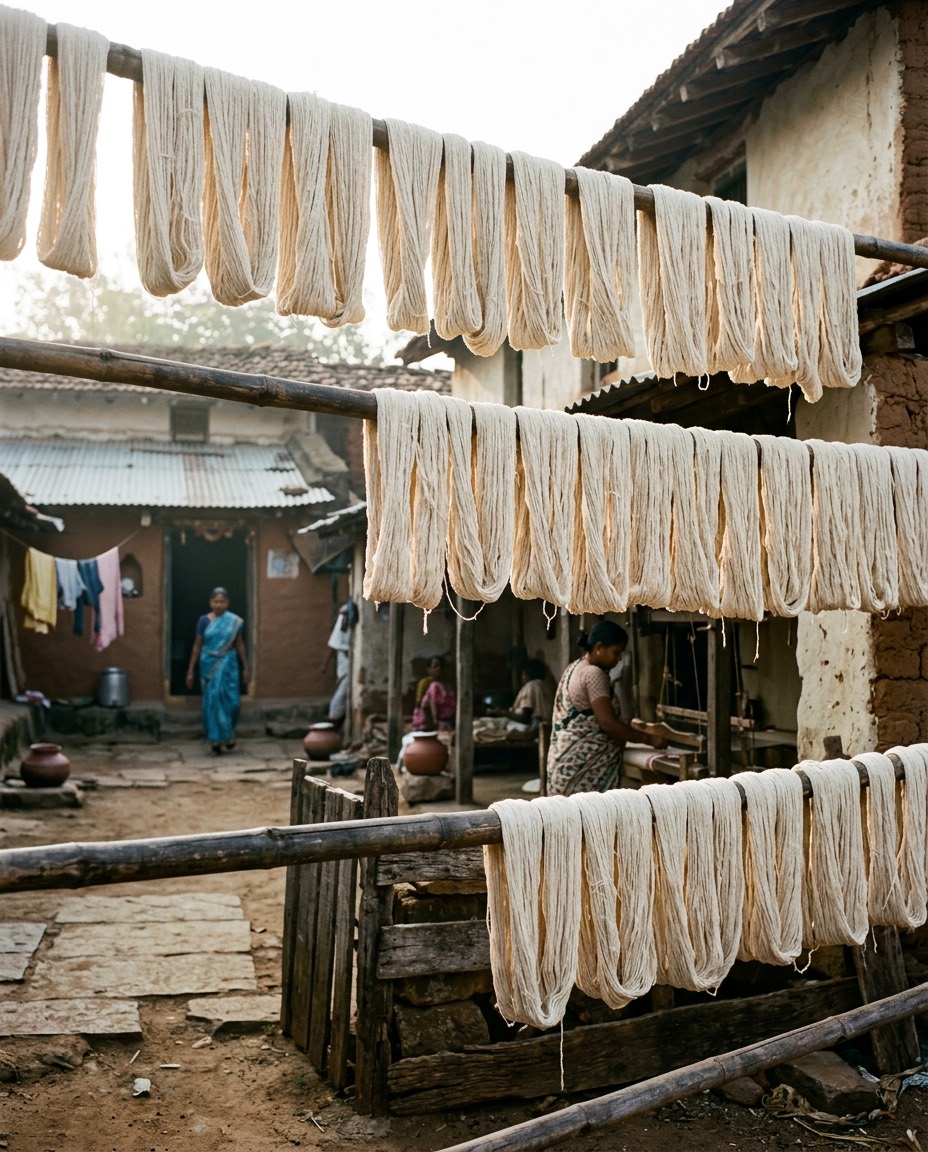 GI register2 min readMangalagiri GI is cotton onlyApplication 198, the register, the public search, and the GI journal. Not pattu. Not Jamdani.Read the guide
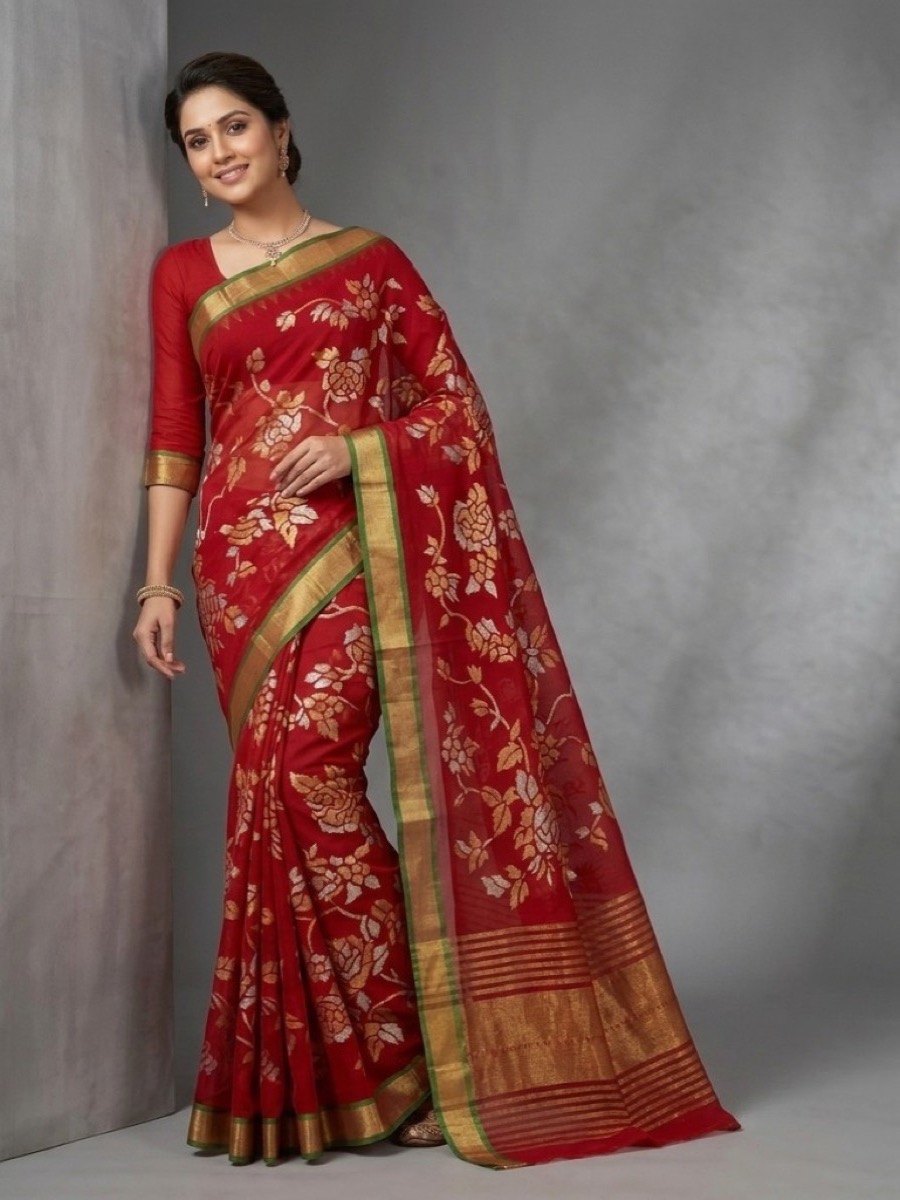 Jamdani2 min readJamdani on our loomsWoven on the family looms, about three months a saree. The house’s own statement. Not Mangalagiri pattu.Read the guide
 Care4 min readSaree care guideFirst wash, starching, storing and zari care.Read the guide